Shower Door Buying & Spec Guide
Tempered Glass Shower Door Buying Guide: Thickness, Safety & B2B Specs
How to choose the right door layout, frame style, glass thickness, and hardware finish for real bathrooms—with every safety stamp, test number, and export packing rule checked against official standards.

Quick Picks: Which Shower Door Fits Your Bathroom?
Buying a tempered glass shower door comes down to three practical questions: how much room you have outside the shower, how much metal framing you want to clean, and whether your walls can hold heavier glass.
- Small bathroom or tub alcove: Pick a bypass sliding door in 8 mm (5/16″) glass. The doors glide past each other, so they never bang into a nearby vanity or toilet.
- Standard hotel or apartment rollout: Use 8 mm tempered glass in semi-frameless or slim-track stainless frames. It feels solid, keeps hardware wear low, and packs efficiently in containers.
- Open luxury frameless shower: Step up to 10 mm (3/8″) tempered glass for wide hinged doors or walk-in panels—just make sure solid wood blocking or masonry sits behind the tile.
- Extra safety or busy commercial keys: Add factory anti-explosion film or specify heat-soak tested glass (EN 14179-1:2016), then verify destination safety stamps in Step 7.
01. Pick Your Door Style First (Space Dictates Everything)
Before comparing glass thickness or handle finishes, look at the floor right outside your shower. If a toilet or vanity sits within two feet of the threshold, a swinging door simply will not fit—let your layout narrow the choices down first.
| Door Type | Best Bathroom Layout | Space Needed Outside | Biggest Advantage | Watch-Out |
|---|---|---|---|---|
| Sliding (Bypass) | Alcoves between three walls (48″–60″+) and standard bathtubs | Zero swing space outside | Saves tight floor space; water drips stay inside the tray | Door panels overlap, leaving roughly half the width as your walk-in opening; tracks need occasional wiping |
| Hinged / Pivot | Narrow shower bays and custom alcoves with open floor space | Full door width clear outside (check toilet & towel bar clearance) | Wide open doorway and zero overlap tracks for fast housekeeping | Heavy glass hangs off one side—requires solid wall studs or masonry behind hinges |
| Neo-Angle (Corner) | Square corner bathrooms where a hinged corner feels tight | Moderate diagonal clearance out from center bevel | Cuts off the sharp outer corner to open walkways around vanity and toilet | Three-panel corner geometry needs exact wall angle measurement before tempering |
| Walk-In Screen / T-Partition | Open walk-in wet zones or split wet/dry hotel layouts | Zero swing arc (or slider on dry side for T-partition) | Minimal parts to break or adjust; separates shower spray from toilet zone | Open fixed screens let warm steam escape faster than closed doors unless spray angle is controlled |
02. Framed vs. Semi-Frameless vs. Frameless
In shower door design, one simple rule decides cost and hardware weight: the less metal frame you use around the door, the thicker the glass has to be. A full aluminum frame acts like a picture frame supporting thin glass, while a frameless glass door acts as its own structural beam.
| Frame Style | Look & Feel | Typical Glass | Leak Protection & Cleaning | Crooked-Wall Tolerance & Price |
|---|---|---|---|---|
| Framed | Metal wraps every glass panel and door edge | 6 mm (1/4″) | Very tight water seal, but bottom U-tracks collect soap scum if ignored | Most forgiving on uneven walls; lowest budget |
| Semi-Frameless | Slim metal tracks at walls/top; exposed polished door edge | 8 mm (5/16″) | Strong seal along wall channels with cleaner sightlines and simpler wipe-down | Wall channels hide minor lean; smart middle ground for hotels and apartments |
| Frameless | Clear uninterrupted glass held by minimal clips, hinges, or top bar | 10 mm (3/8″) or 12 mm (1/2″) | Easiest to squeegee clean; relies on precise vinyl sweeps and flat glass to stop spray | Least forgiving on crooked tile; highest glass and installation cost |
03. Glass Thickness: 6 mm vs. 8 mm vs. 10 mm vs. 12 mm
Architectural float glass weighs 2.5 kg/m² for every millimeter of thickness (based on a standard 2,500 kg/m³ density per EN 572-2:2012). That single number explains almost everything about cost and durability: jumping from 8 mm to 10 mm adds 25% dead weight to the hinges, rollers, tile anchors, and sea-freight container.
| Thickness | Weight per m² | Typical Door Weight (700 × 2000 mm) | Best Fit | Hardware & Wall Note |
|---|---|---|---|---|
| 6 mm (1/4″) | ~15.0 kg/m² (~3.07 lb/ft²) | ~21 kg (46 lb) | Fully framed enclosures and lightweight sliding kits | Too flexible without a full frame; legal minimum floor in markets like AS 1288 |
| 8 mm (5/16″) | ~20.0 kg/m² (~4.10 lb/ft²) | ~28 kg (62 lb) | B2B hotel sweet spot: semi-frameless sliders, diamond corners, and framed partitions | Firm feel without overloading rollers or 40HQ container weight limits |
| 10 mm (3/8″) | ~25.0 kg/m² (~5.12 lb/ft²) | ~35 kg (77 lb) | Full-height frameless hinged doors and wide walk-in fixed screens | Needs solid stud blocking behind tile and heavy-duty hinges/clamps |
| 12 mm (1/2″) | ~30.0 kg/m² (~6.14 lb/ft²) | ~42 kg (93 lb) | Extra-tall ceiling-height glass and luxury custom suites | Two-person heavy lift; rarely worth the extra cost on standard hotel rooms |
Standard check — why “8 mm” or “3/8″” glass sometimes rattles inside gaskets: European float glass under EN 572-2:2012 stays tightly symmetric (±0.2 mm on 6 mm; ±0.3 mm on 8/10/12 mm), whereas North American ASTM C1036 allows broader actual limits (7.42–8.43 mm for 8 mm, and 9.02–10.31 mm for 3/8″/10 mm). If you pair U.S.-milled glass with tight metric U-channels or clamps, specify compressible EPDM shims and match gasket sizing—just as AS 1288:2021 also keeps 8–10 mm (usually 10 mm) as the practical norm for unsupported frameless doors even when 6 mm sits on paper as a minimum. See our tempered glass shower enclosure lineup for matched glass-and-channel builds.
04. Glass Finishes, Safety Basics & Stopping Spontaneous Breakage
Clear tempered glass shows off feature tile and opens up tight bathrooms, though hard-water spots show sooner unless wiped after showers. For shared baths or easier upkeep, choose grey, blue, or brown tinted glass, or specify frosted or patterned films for privacy while keeping natural light.
Why tempered glass stays safe—and what separates good glass from cheap glass: Real tempered glass is baked at ~620–650°C and blast-cooled so its surface holds permanent compressive stress. If a panel ever breaks, it crumbles into dozens of dull pebble-like cubes instead of long razor shards. Cheap furnaces create warped panes that never seal flat against magnetic door strips, or mix up partially strengthened glass that still shatters dangerously.
Technical check — stress, shatter size, and door flatness: True fully tempered glass (ASTM C1048 Kind FT) requires ≥ 69 MPa (10,000 psi) surface compression or ≥ 67 MPa (9,700 psi) edge compression (~4× ordinary glass); never accept Heat-Strengthened Kind HS (24–52 MPa), which breaks like regular glass. Europe’s EN 12150-1:2015+A1:2019 checks both safety dicing (4–12 mm glass must yield ≥ 40 particles per 50 × 50 mm with longest shard ≤ 100 mm) and warpage (max 3.0 mm/m overall bow and 0.3 mm per 300 mm roller wave on uncoated float glass—equal to up to 6 mm curve on a 2 m door).
What about sudden “self-exploding” glass? On rare occasions, tiny hidden specks of nickel sulfide (NiS) inside molten float glass expand ~2–4% over months and shatter a tempered pane with zero knock. For upper-upscale hotels or busy projects, three practical upgrades eliminate most of that worry:
- Heat-Soak Testing (EN 14179-1:2016): The factory bakes finished tempered panels at 260°C ± 10°C for at least 2 hours (never exceeding a 290°C ceiling, unlike older 2005 practices) so unstable NiS panes break inside the oven instead of a guestroom. It weeds out roughly 95%+ of critical NiS defects—far safer, though never mathematically 0%.
- Anti-Explosion Nano Safety Film: A clear factory-bonded film holds broken glass pebbles together in one piece so glass stays off bathroom floors.
- Tempered Laminated Glass: Two tempered panes bonded with a moisture-resistant interlayer stay standing in the hardware even if both faces crack.
05. Hardware Finishes, Rust Proofing & Roller Life
Hinges, rollers, and door seals usually wear out long before tempered glass does. Always match your frame finish (mirror chrome, matte black, gunmetal grey, or brushed gold) with real finish samples beside your shower systems and bathroom faucets—names like “brushed gold” vary widely across factories.
- Stainless 304 vs. 316 for rust defense: Standard indoor hotel rooms work well with 304 stainless steel (~18% Cr, ~8% Ni—rated MICAWA 304 stainless passes 48-hour neutral salt spray at Grade 10). If your project sits on a beach, outdoors, or beside a chlorinated indoor pool, specify 316 stainless steel (+2–3% molybdenum) to block salt pitting. When anodized aluminum profiles are chosen for lighter framed units, look for ≥ 95% purity, 13–14 HW hardness, and ≥ 10 μm anodized film.
- Roller & hinge life cycles: Everyday household sliders only need to clear Europe’s 20,000 open/close baseline (EN 14428 Clause 4.4.5). For commercial hotels, upgrade to stainless bearing rollers tested past 50,000 cycles at ≤ 45 dB (like MICAWA MPF-030) with anti-jump locks, and check door swing paths against standard shower dimensions and shower valve clearances.
- Watertight seals: Specify magnetic EVM door strips rated across −20°C to 70°C paired with a double-layer U-shaped threshold barrier to stop leaks in EN 14428 Clause 4.4.7 spray checks.
Standard check — reading hardware corrosion reports: When factories quote salt-spray hours, confirm testing follows EN ISO 9227:2022 Neutral Salt Spray (NSS): 5% NaCl mist at 35°C ± 2°C with fallout pH between 6.5 and 7.2.
06. How to Measure Before Ordering (Measure After Tiling!)
Never order tempered glass off rough framing plans. Waterproofing, thinset mortar, and porcelain wall tile eat up 20–40 mm of opening width—and once tempered, a glass lite cannot be trimmed by even 2 mm on site (see Step 4). Wait until tile is grouted, then run four checks:
- Measure width at top, middle, and bottom: Use the narrowest figure for tight sliding gaps, or pass all three to the factory so jamb profiles compensate cleanly.
- Measure finished height from curb or tray lip: Check overhead soffits, low ceilings, and tall rain shower arms so sliding headers or outward doors stay clear.
- Check wall lean with a long spirit level: Almost no tiled wall is dead plumb. Pick a model with adjustable wall channels (±10 mm or ±15 mm) if walls tilt slightly; larger slope requires custom angled glass cut prior to tempering.
- Check threshold slope & corner safety: curbs should pitch gently inward toward the floor drain so standing spray flows back inside; on MICAWA factory builds where specified, exposed glass corners are rounded to R ≥ 3 mm to prevent chip damage during installation.
07. Safety Stamps, Compliance Codes & Export Packing (Contractors & Importers)
Every rule covered so far—glass thickness in Step 3, stress and flatness in Step 4, hardware cycles in Step 5—ties together at two checkpoints: building inspection at handover and customs clearance at port. Neither a factory’s ISO 9001 certificate nor China’s domestic 3C mark clears North American, EU, or Australian inspections on its own.
| Market | Governing Codes | What the Test Actually Checks | Proof Needed Before Paying |
|---|---|---|---|
| United States | 16 CFR Part 1201 & ANSI Z97.1-2015 (R2020) · Wet zones: IRC R308.4.5 / IBC 2406.4.5 | Under § 1201.2(a)(4)(i)–(ii), shower & tub doors are always Category II regardless of glass size—tested at 400 ft-lbf (100 lb bag from 48 in per § 1201.4); 10 largest fragments ≤ 10 sq in (laminated/filmed holds 3-in / 76 mm, 4 lb sphere) | Permanent corner bug per § 1201.5 + active SGCC plant ID (required anywhere < 60 in vertically & horizontally from tub/shower edge) |
| European Union / UK | EN 12150-1 (glass) + EN 14428:2015+A1:2018 (enclosure) | Dual approval: glass fragmentation & flatness (EN 12150-1) plus complete-door CE testing under CPR (EU) 305/2011 for 20,000 cycles, water retention, stability, and cleanability | EN 12150 glass stamp + CE Declaration of Performance (DoP) covering the full assembled door unit |
| Australia / New Zealand | AS/NZS 2208:1996 & AS 1288:2021 | Mandatory Grade A safety glass (NSW Fair Trading rules); AS 1288 sets 6 mm minimum with 8–10 mm (usually 10 mm) standard for frameless hinged doors | Permanent AS/NZS 2208 Grade A mark visible after glazing; silicone used solely as sealant, never structural support |
| China Domestic | GB 15763.2 / CCC (3C) | ≥ 40 fragments per 50 × 50 mm area (4–12 mm glass), steel-ball impact, and 45 kg shot-bag tests | Permanent fired 3C logo on each lite (does not substitute for U.S., EU, or AU import marks) |
2-Minute Check: How to Audit a U.S. Corner Bug Before Mass Production
Under SGCC SD-203 Label Requirements, every permanent fired or laser-etched corner bug must list five items: (1) the glass temperer’s SGCC ID, (2) standard codes (ANSI Z97.1 / 16 CFR 1201), (3) nominal thickness, (4) Category II / Class A, and (5) size code (U or L). Before wiring a deposit, ask for the actual glass plant’s SGCC number—not an assembler’s ISO 9001—and verify it inside the SGCC Certified Products Directory (SD-202).
4 Export Packing Rules That Stop Container Breakage & Port Holds
Even though tempered glass faces are tough, one sharp bump along an exposed edge during container devanning shatters the sheet. Include these four packing terms in your bathroom project RFQ and fixture coordination sheet:
- ISPM 15 heat-treated wood crates: Solid wood packaging must be kiln-heated to 56°C core temperature for 30 continuous minutes and carry an official IPPC ISPM 15 HT mark, or agencies like U.S. CBP will hold or re-export the shipment at your cost.
- Upright crating, never flat: Stand glass panes vertically on edge inside diagonally braced timber crates—never stack ceramics or vanities on top of flat glass boxes.
- Corner armor & foam interleaving: Fit molded corner protectors and foam sheets between lites so sea vibration never rubs edges together.
- Box metal hardware separately & plan container count: Keep tracks, rollers, and jambs in partitioned boxes away from glass surfaces. Documented crated loads run roughly ~220 sets/40HQ (MPF-030) and ~200 sets/40HQ (MPF-034), confirmed per order.
08. Match Your Spec to MICAWA Shower Enclosure Models
With a reported 25,000 sets/year shower enclosure capacity, MICAWA supplies four core geometries for hotel bathroom projects and importers. Note that MPF-030 and MPF-034 support custom non-standard sizes with full test and container-load records, while MPF-042 and MPF-047 are quoted strictly by glass area against approved opening drawings.
| Model | Door Setup | Verified Glass & Tint / Film Scope | Verified Hardware & Jamb Tolerance | Quotation, MOQ & Container Basis |
|---|---|---|---|---|
| MPF-030 | Straight alcove bypass double slider | 8 mm standard or 10 mm optional tempered float glass; 3C certified (CE documentation referenced on selected builds); optional nano safety film | 304 stainless bearing rollers (50,000 cycles, ≤ 45 dB), ±15 mm wall channel adjustment, double-layer EVM seals | Custom non-standard widths/heights; project-based MOQ; ~220 sets / 40HQ in fumigated wood crates |
| MPF-034 | Diamond neo-angle corner hinged door | 8 mm tempered glass verified under 18 kg steel-ball drop impact test | 120° outward solid 304 stainless hinges (Grade 10, 48-hr salt spray), ±10 mm wall adjustment, magnetic seal & bottom deflector | Custom non-standard corner sizes; project-based MOQ; ~200 sets / 40HQ in fumigated wood crates |
| MPF-042 | T-shaped dual-purpose sliding wet/dry partition | 8 mm tempered glass (clear or optional grey, blue, brown tint); optional protective, clear, patterned, or frosted film | Stainless steel profiles in mirror chrome, matte black, gunmetal grey, or brushed gold | Quoted by glass area & approved drawing; project-based MOQ; specs confirmed at quotation |
| MPF-047 | Straight-line slim bottom-roller double slider | 8 mm tempered glass (clear or optional grey, blue, brown tint); optional protective, clear, patterned, or frosted film | Slim bottom-roller straight-line double sliding system; stainless steel profiles in mirror chrome, matte black, gunmetal grey, or brushed gold | Quoted by glass area & approved drawing; project-based MOQ; specs confirmed at quotation |
Compliance boundary: Current MICAWA glass builds carry 3C certification, with CE documentation referenced on selected configurations. Projects requiring 16 CFR Part 1201, ANSI Z97.1, SGCC directory traceability, EN 12150-1 / EN 14428 DoP, AS/NZS 2208, or EN 14179-1:2016 HST documentation confirm exact model-level certification at RFQ stage; all orders run on project-based MOQs.
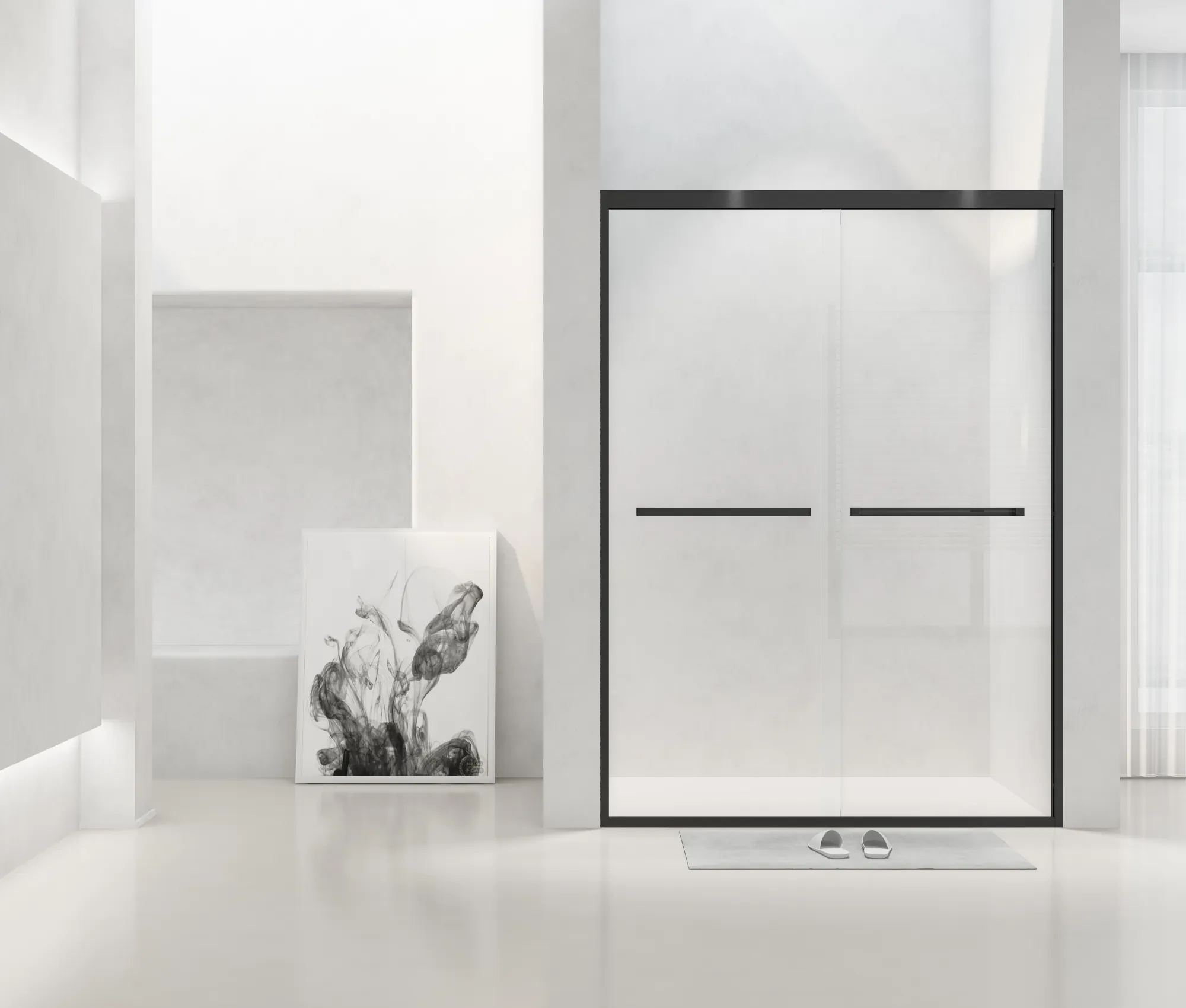
MPF-030 · Bypass Sliding
8/10 mm tempered glass, ±15 mm jambs, 50,000-cycle 304 rollers.
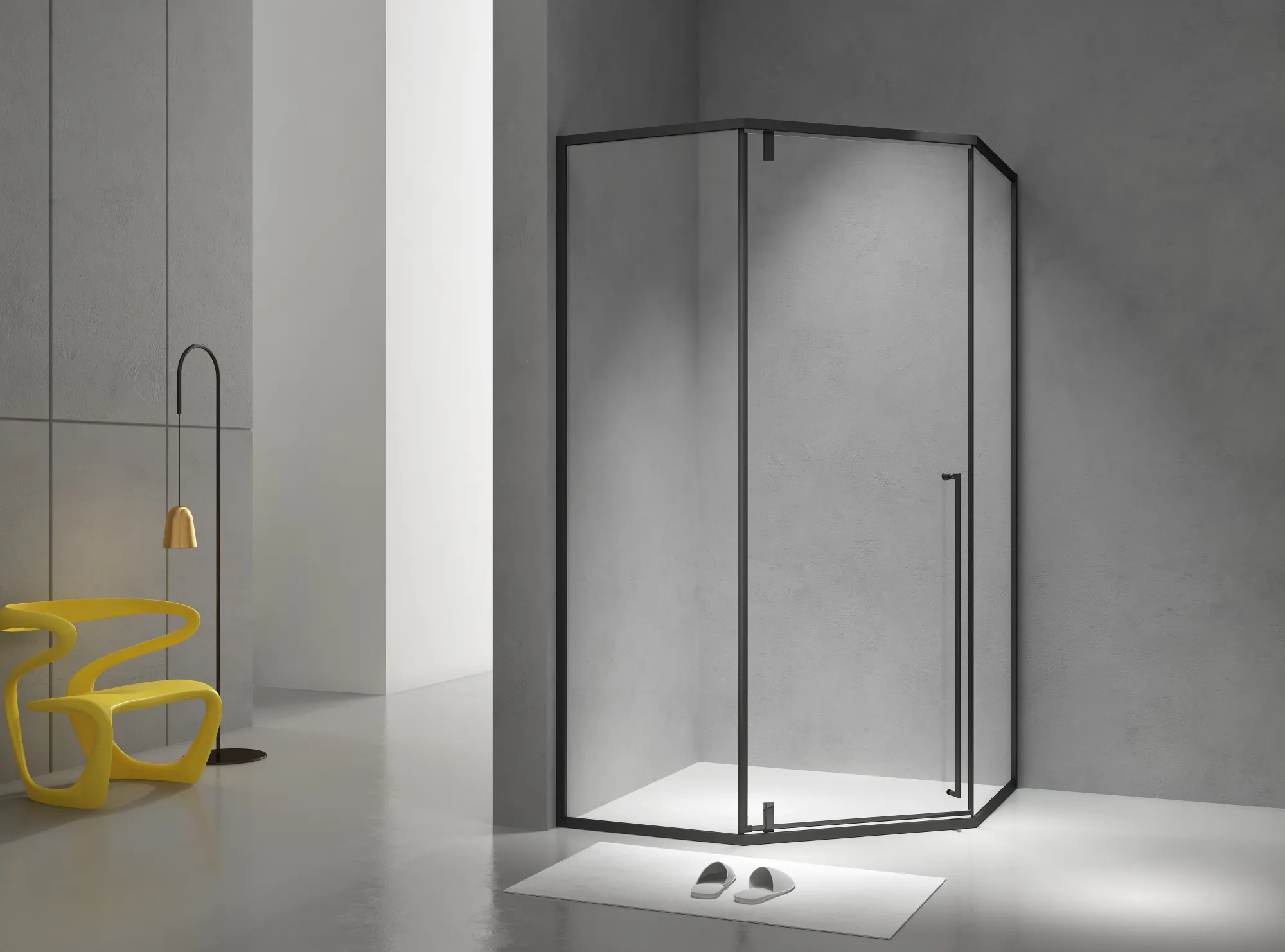
MPF-034 · Diamond Corner
8 mm impact-tested glass, 120° 304 stainless hinges, ±10 mm jambs.
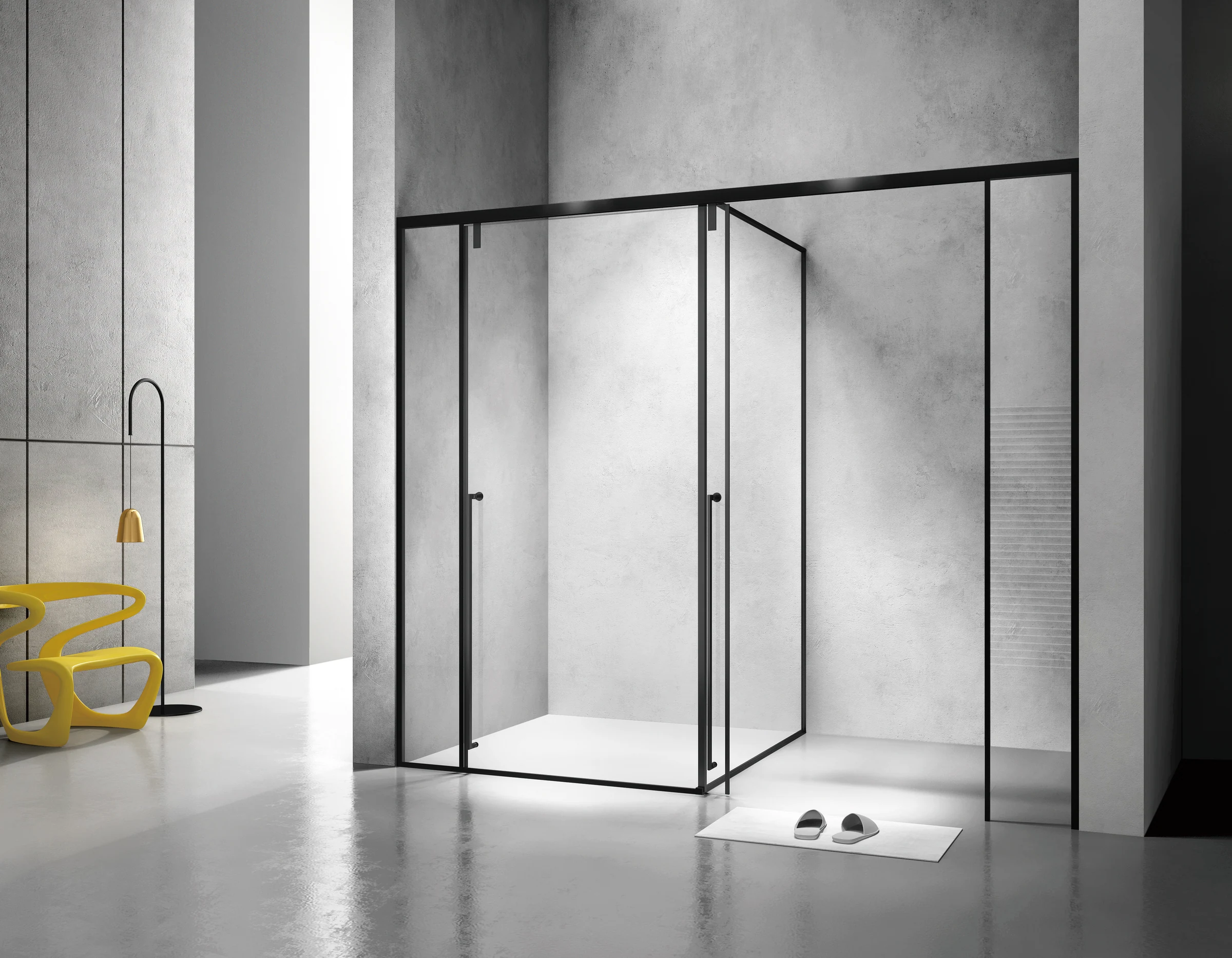
MPF-042 · T-Shape Partition
8 mm glass, 4 stainless steel profile finishes, optional tint & film.
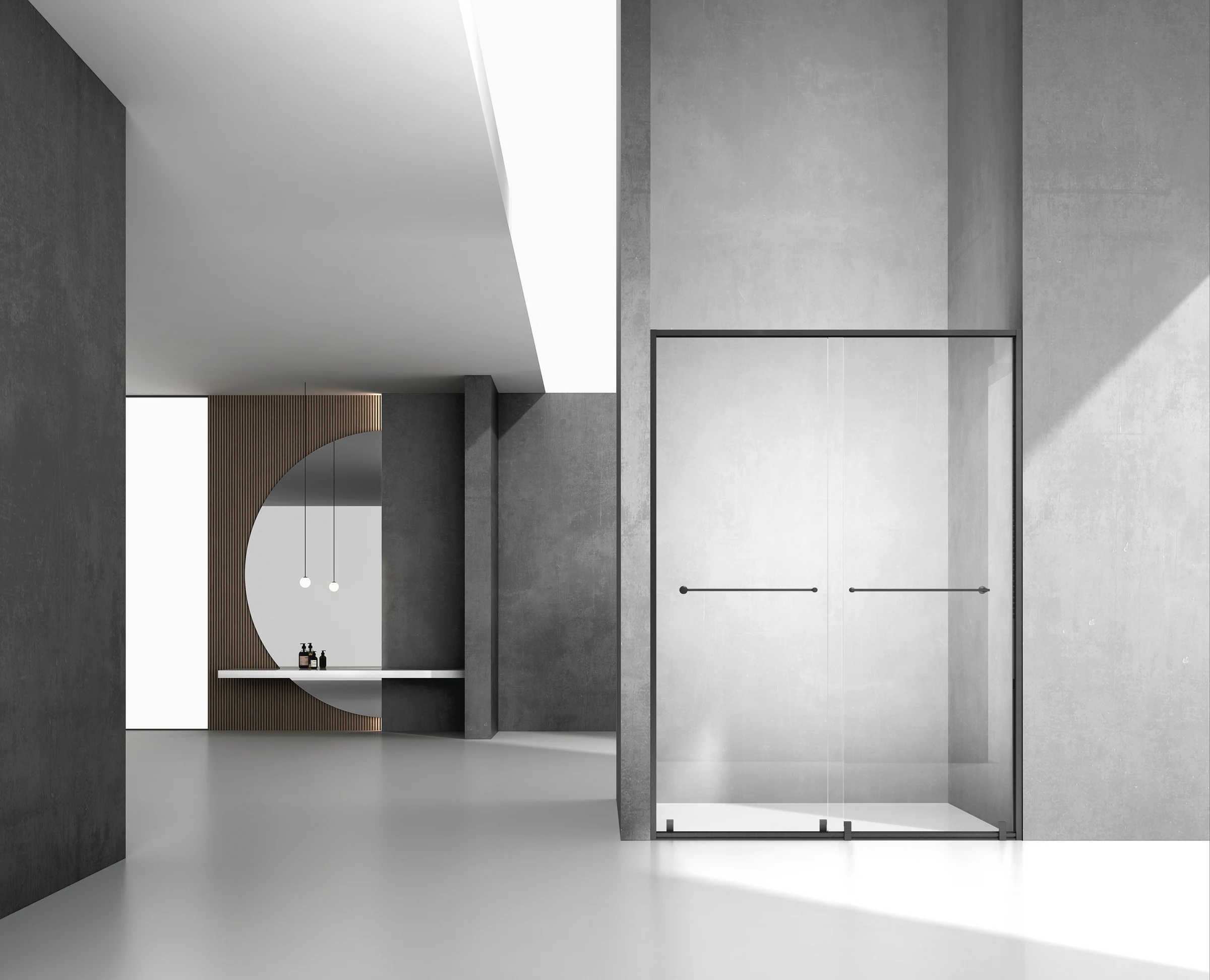
MPF-047 · Slim Bottom-Roller
8 mm glass, slim bottom-roller sliding design, 4 stainless finishes.
Request a Shower Enclosure Quote from MICAWA
Send your finished tiled opening sizes, bathroom layouts, destination market, and preferred finish. We will confirm matching models, shop drawings, packing details, and project-based MOQs.
Standards & End-to-End Reference Chain
Stage 1 · Glass Weight, Tolerances, Stress & Flatness (Steps 3–4)
- EN 572-2:2012 — soda-lime float glass density (2,500 kg/m³) & symmetric thickness tolerances (±0.2 / ±0.3 mm).
- EN 12150-1:2015+A1:2019 — ≥ 40 particles / 50×50 mm (4–12 mm glass), ≤ 100 mm max shard length, 3.0 mm/m overall & 0.3 mm/300 mm local bow limits.
- Cited U.S. Glass Benchmarks: ASTM C1048 (Kind FT ≥ 69 MPa / 10,000 psi surface or ≥ 67 MPa edge compression vs. Kind HS 24–52 MPa) & ASTM C1036 Table 2 actual thickness limits.
Stage 2 · Spontaneous Breakage, Hardware Corrosion & Cycles (Steps 4–5)
- EN 14179-1:2016 — heat-soak holding phase (260°C ± 10°C for ≥ 2 hours, 290°C maximum ceiling).
- EN ISO 9227:2022 — Neutral Salt Spray test (5% NaCl, 35°C ± 2°C, pH 6.5–7.2).
- EN 14428:2015+A1:2018 — full shower enclosure CE standard under (EU) 305/2011 (Clause 4.4.5: 20,000 cycles; Clause 4.4.7: water retention).
Stage 3 · Market Safety Approvals, Corner Stamps & Export Crating (Steps 7–8)
- U.S. eCFR 16 CFR Part 1201: § 1201.2(a)(4)(i)–(ii) (unconditional Category II for shower/tub doors), § 1201.4 (400 ft-lbf impact, 10-largest fragments ≤ 10 sq in, 3-in / 76 mm sphere check), and § 1201.5 (permanent corner label). Also cited: ANSI Z97.1-2015 (R2020) and IRC R308.4.5 / IBC 2406.4.5 (60-inch wet-zone glazing rule).
- SGCC — SD-203 Label Requirements PDF & SD-202 Certified Products Directory PDF.
- AS/NZS 2208:1996, AS 1288:2021 & NSW Fair Trading Glass Safety Guide. Also cited: GB 15763.2 (China domestic tempered glass standard).
- IPPC ISPM 15 (56°C / 30 min wood core HT standard) & U.S. CBP Wood Packaging Enforcement.
- MICAWA Product & Engineering Records (
FOSHAN MICAWA CERAMICS CO., LTD.— MPF-030, MPF-034, MPF-042, and MPF-047 specs and 25,000 sets/year reported capacity).
Related Sourcing Guides
Standard Shower Dimensions: Sizes, Minimums & Clearances
Compare 30×30, 36×36, 48×36, and 60×36 in layouts against IRC minimums, the 22-inch door rule, and tile loss.
Bathroom Fixture Coordination Guide for Projects
Coordinate shower enclosure openings, finished wall measurements, and hardware finishes across bathroom packages.
Concealed vs. Exposed Shower Systems: Pros, Cons & Rough-In
Prevent valve-to-door clashes and confirm concealed box depth inside compact hotel shower stalls.
Bathroom Project RFQ Checklist for Procurement Teams
Structure room schedules, finished opening surveys, compliance requests, and delivery schedules before quoting.