

Skip to content

Bathroom Sourcing Support Matched to Your Role

The right product range is only part of the decision. Choose the pathway that matches who owns the assortment, brand, project or specification approval.

4 buyer-role pathways

Multi-category product access

Catalog and development routes

Project and specification support

Do you need a role-specific sourcing route?

Use one when the buying decision involves more than finding a model and asking for a price.

The product list has no clear owner

Models, finishes and quantities move between sales, design and procurement without one coded approval basis.

Make the hidden cost visible: Track the number of uncoded lines, duplicate versions and unresolved owners.
Supplier quotations use different assumptions

Inclusions, documentation, packaging and delivery basis are not aligned, so prices cannot be compared cleanly.

Make the hidden cost visible: Count deviations, exclusions and blank commercial fields before comparison.

Cross-category interfaces are approved too late

Basin, cabinet, faucet, shower and service decisions are reviewed separately even though they affect one another.

Make the hidden cost visible: List every interface still marked TBD before sample or drawing approval.

The buying route does not match the business goal

A distributor assortment, a private-label program and a project package need different inputs and approvals.

Make the hidden cost visible: Count decisions that cannot be assigned to catalog supply, development or project coordination.

Check these signs

If two or more apply, choose a pathway before building the product shortlist.

  • ✓ You are selecting products for resale or repeated replenishment.
  • ✓ Your brand needs packaging, finish or product-development decisions.
  • ✓ Your project has room types, quantities, drawings or phased delivery.
  • ✓ Your design team needs samples, finish references or technical responses.
  • ✓ Several stakeholders must approve the same written product basis.

Decision rule: choose the route that owns the final business outcome, then bring other stakeholders into its approval plan. For supplier-side checks, see how to evaluate a bathroom products manufacturer.

Compare the four sourcing pathways

Roles may overlap, but the primary decision, first input and useful output should remain clear.

DecisionImporters & DistributorsBrands & Private LabelCommercial Project BuyersDesigners & Specifiers
Primary business decisionWhich products fit our market?How should the range be differentiated?How do we deliver an approved project package?How do products support the design intent?
Best first inputTarget market, channel and assortment gapsBrand brief, references and ownership requirementsRoom schedule, quantities, drawings and milestonesSpecification, dimensions, finish intent and samples
Main evaluation focusBreadth, evidence, commercial basis and repeat supplyOEM/ODM route, samples, packaging and approvalsInterfaces, compliance, coordination and delivery phasesTechnical fit, finish consistency and approval records
Useful outputShortlisted assortment and quotation basisDevelopment brief and approval planCoded product schedule and RFQ packageProduct coordination and open-items register

Decision rule: do not choose a pathway by job title alone; choose it by the approval and commercial output required in the current sourcing stage.

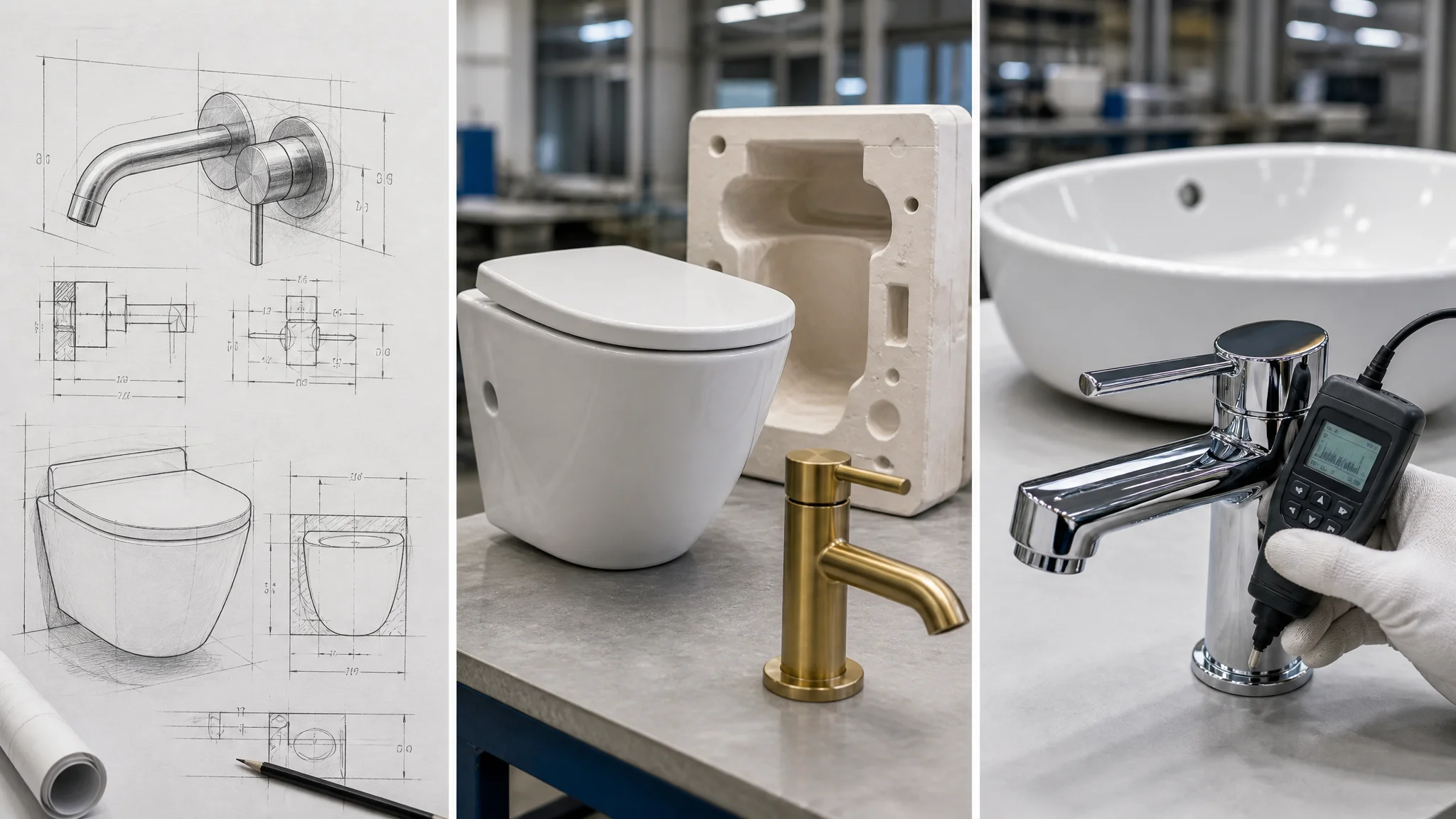
Bathroom product development process from engineering drawing and ceramic mold to finished faucet and basin inspection

Not sure whether the work is catalog supply or product development?

Separate existing-model selection from changes to design, tooling, packaging, validation or product ownership before requesting a quotation.

Compare OEM and ODM

Move from buyer role to an approvable quotation basis

  1. 01

    Identify the buying role

    Choose the route that owns the final commercial decision, even if several teams participate.

    Named route and decision owner

  2. 02

    Prepare the right brief

    Use market, brand, project or specification inputs that match that route.

    Role-specific sourcing brief

  3. 03

    Review products and evidence

    Shortlist categories, then record technical, sample, document and commercial gaps.

    Shortlist and open-items register

  4. 04

    Approve the quotation basis

    Align quantities, inclusions, packaging, delivery basis and deviations before comparing offers.

    Comparable RFQ and approval basis

Decision rule: every stage should end with a written output that the next approver can review. Project teams can use the bathroom project RFQ checklist as the final handoff structure.

Use the guide that matches your current decision

Buyer Pathway Questions

Questions for teams whose roles overlap across sourcing, design and project delivery.

Which customer route should a company choose if it is both an importer and a private-label brand?

Choose the route that matches the current decision. Use Importers & Distributors when the task is assortment selection, supplier comparison or repeat supply. Use Brands & Private Label when product ownership, controlled changes, packaging or development approvals are the main task.

What should a buyer prepare before choosing a MICAWA sourcing pathway?

Prepare the target market, buyer or project type, required product categories, approximate quantities, current project or development stage, decision owners and the technical, sample or document questions that remain open.

Can a commercial project buyer request only one bathroom category?

Yes. The project route is still useful when one category must follow room quantities, drawings, finish references, documentation or phased delivery requirements. If those project controls do not apply, the relevant product category page may be the faster starting point.

Is the designers and specifiers route only for architecture firms?

No. It can also suit interior designers, consultants, specifiers and project teams responsible for translating design intent into dimensions, finishes, samples, drawings and written approval requirements.

Can several buyer roles participate in one bathroom sourcing program?

Yes. Name one commercial decision owner, then record who approves product selection, technical details, design intent, samples, documents and delivery. The pathway should clarify ownership rather than exclude other stakeholders.

Send a brief that matches your buying role

Include the target market, product categories, quantity range, business or project objective, current approval stage, required samples or documents, packaging needs, drawings, finish references and delivery assumptions that apply.

One lead decision ownerRole-specific checklistOpen items made visible
Prepare a Sourcing Brief

We use only necessary browser storage to remember privacy preferences and support core site functions.