
Project Brief
| Project Scale | Main Risk | MICAWA Approach |
|---|---|---|
| Large apartment community | Product changes repeated across units and phases | Controlled bathroom packages and phased supply |
In Residential Projects, Revisions Have a Long Reach
Changing a faucet in a single home is simple. Changing it after hundreds of countertops, cabinets or pipe positions have been planned is not.
Guangzhou Panyu Times City required a bathroom supply programme that could keep product decisions stable across repeated apartment layouts and construction phases. MICAWA coordinated sanitary ware, cisterns, faucets, bathroom cabinets and shower products around that need.
The Challenge: Keep Drawings, Products and Phases Aligned
A residential development moves through design, samples, procurement, production and construction over an extended period. During that time, product codes and quantities may be revised.
If the project team cannot see which room type uses which combination, a local revision can affect several buildings. Cabinets may no longer suit basins or faucets. Cistern and toilet configurations may become mixed. Deliveries may reach the wrong phase.
Establishing a Package Baseline
MICAWA helped organise the product schedule by apartment and bathroom type.
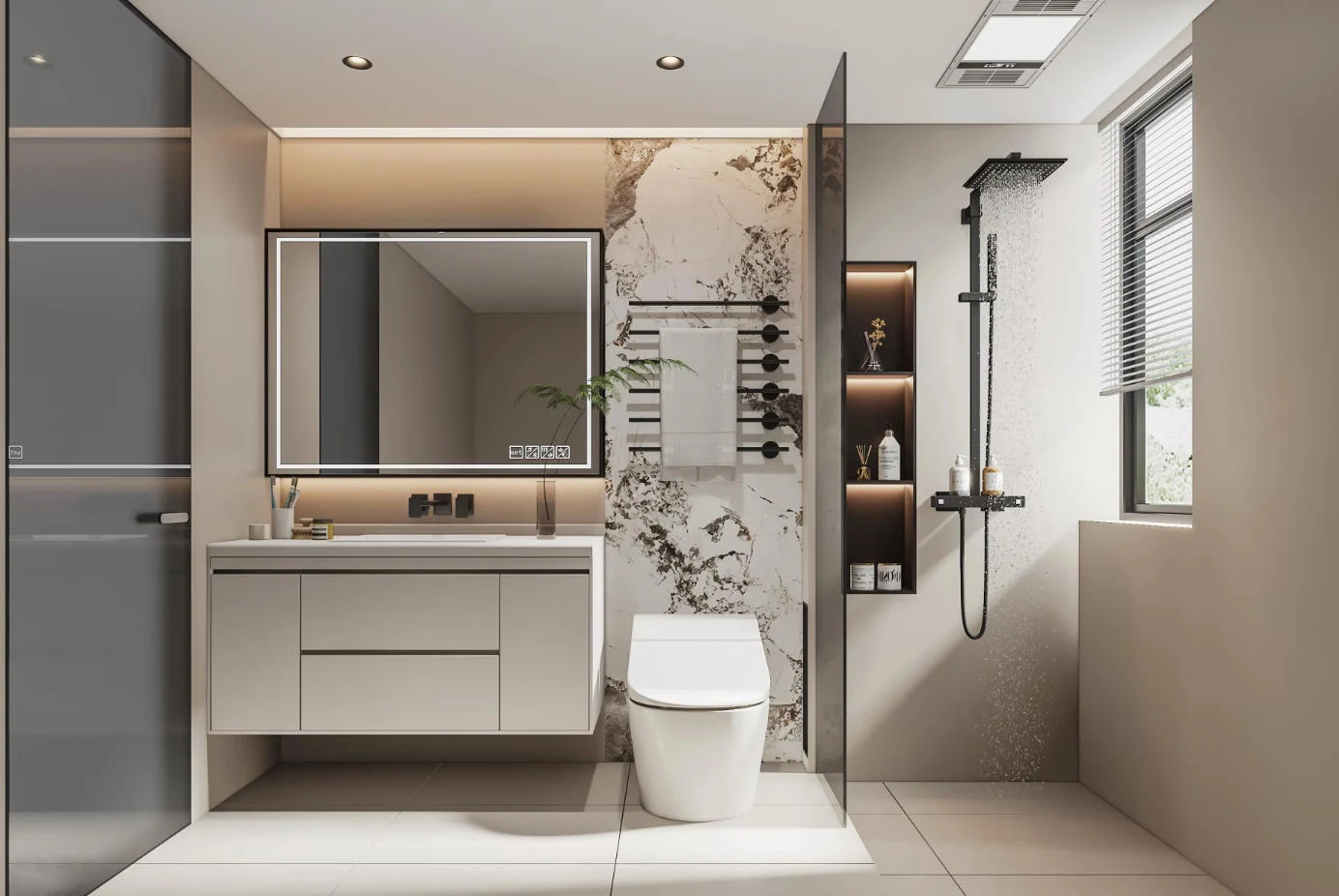
The vanity package linked the cabinet and faucet choices. Sanitary ware and cistern configurations were defined according to the installation arrangement. Shower faucets were matched to the intended bathing area. Alternative combinations were kept distinct rather than allowed to overlap.
Once approved, each package became a baseline. Any later change could be evaluated against the whole room instead of only one product line.
Supplying by Construction Phase
Production and delivery were coordinated around the development programme.
Maintaining the package identity through manufacturing, packing and supply helped contractors understand which products belonged together. Quality control protected the agreed appearance and specification as later batches followed the first approvals.
This structure gave the project team a better way to manage change without losing control of the repeated units.
The Result: Scale without Specification Drift
The Times City project demonstrates that large residential supply depends as much on configuration management as on manufacturing capacity.
By linking product decisions to apartment packages and delivery phases, MICAWA helped reduce the risk of specification drift across the community. The result was a clearer and more repeatable bathroom programme.
Need to Control Bathroom Packages across Multiple Phases?
MICAWA can help structure products by apartment type, revision and delivery phase.