Bathroom supplier selection guide
How to Evaluate a Bathroom Products Manufacturer
A good bathroom manufacturer is not simply the supplier with the largest catalog or lowest unit price. The right partner has a product and production model that fits your program, controls quality at the process level, supports development, and quotes on clear terms.
Use the seven checks below before choosing a bathroom supplier. They are designed for importers, distributors, brands, specifiers, and project buyers comparing full-category manufacturers.
The evaluation principle
Do not score a supplier on the volume of documents it sends. Score how well its product scope, production route, quality controls, development process, and commercial offer match your actual sourcing plan.
Check 1
Check whether the product range matches your sourcing strategy
“Wide product range” can describe very different businesses. A supplier may be a single-category factory, a multi-category manufacturer, a complete bathroom supplier, or a coordinator that sources some categories from external partners.
None of these models is automatically wrong. The risk appears when the operating model is unclear. A focused importer may prefer deep control in one category, while a project buyer may value coordinated supply across the full bathroom product portfolio.
| Supplier model | Best fit | Main point to clarify |
|---|---|---|
| Single-category factory | Deep sourcing in toilets, faucets, vanities, or another category | How other categories will be coordinated |
| Multi-category manufacturer | Assortments that need several related product groups | Which factories and processes belong to the same company |
| Complete bathroom supplier | Projects and distributors consolidating several categories | Where accountability sits across the package |
| Externally coordinated supplier | Programs that need flexible category coverage | Traceability, inspection, and claim ownership |
| Question | Why it matters |
|---|---|
| Which products are manufactured in-house? | Shows where the supplier directly controls production. |
| Which products are assembled? | Reveals how components and sub-suppliers are traced. |
| Which products are externally sourced? | Defines the responsibility boundary for quality and claims. |
For range planning, compare how the supplier supports importers and distributors with how it handles drawings, finish intent, and approvals for designers and specifiers.
Check 2
Verify the actual manufacturing capability
A useful factory review follows the product through production. The buyer should be able to see where materials enter, where the product takes shape, which operations are controlled in-house, and where inspection occurs.
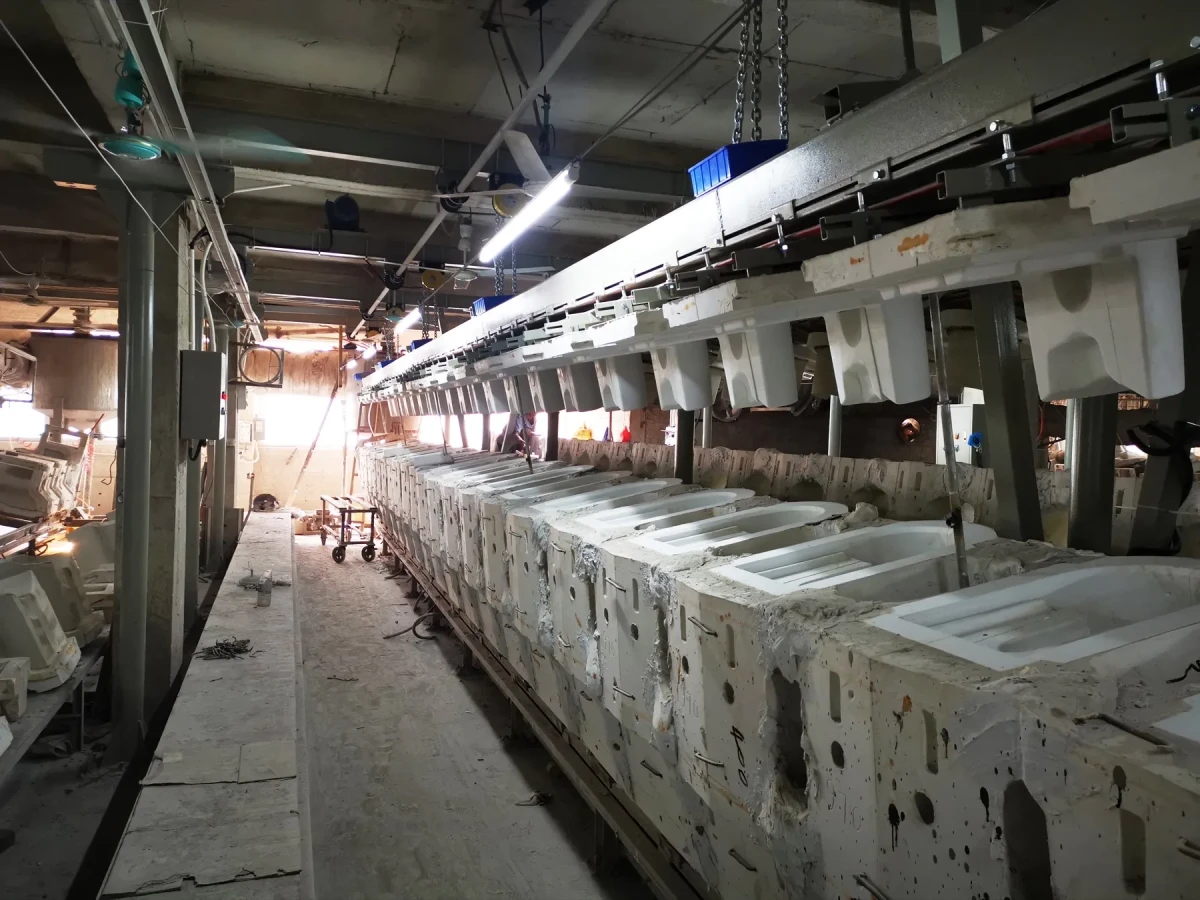
MICAWA’s documented ceramic route provides a practical example: raw-material preparation, slip casting, forming, drying and finishing, glazing, kiln firing, testing and grading, then packing. Its reported ceramic equipment includes two 123-meter tunnel kilns with a 1,280°C, 18-hour firing cycle.
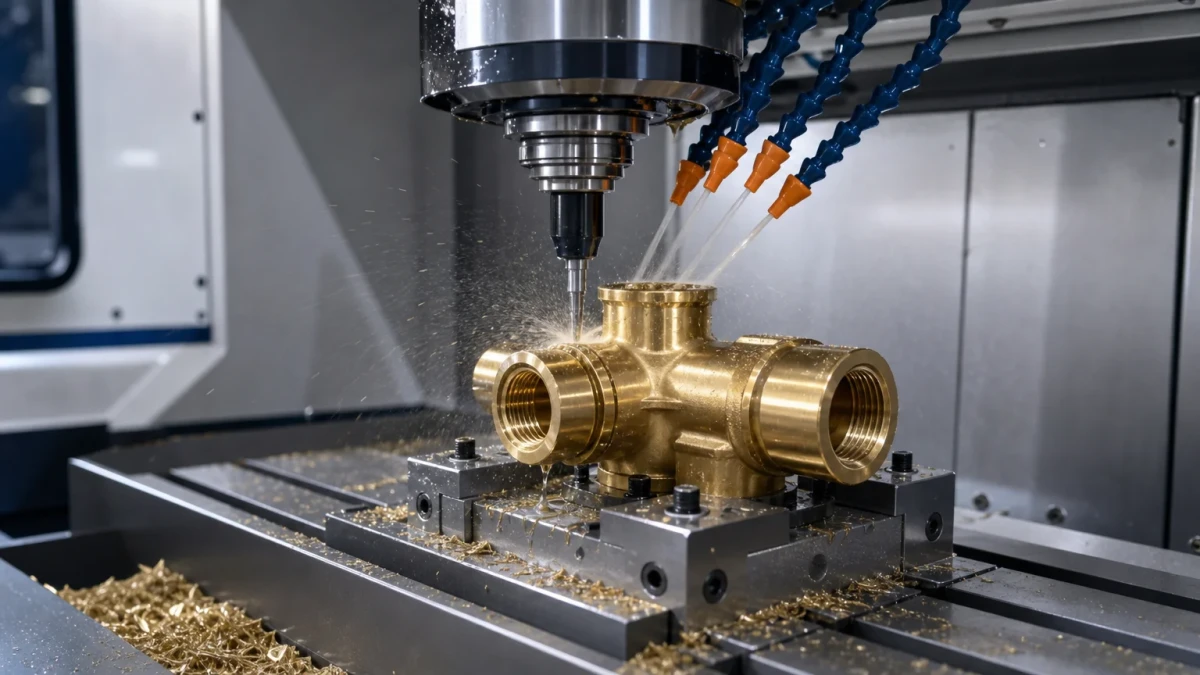
Faucet manufacturing needs a different capability map. MICAWA documents incoming-material inspection, casting or other applicable forming, CNC machining, staged polishing, electroplating or surface finishing, assembly, inspection, and packaging.
Use the same category-specific logic during a site visit or video audit. The MICAWA factory and manufacturing overview shows how ceramic, bathroom furniture, faucet, testing, and warehousing resources are coordinated. If you are still deciding between supplier types, first compare a bathroom factory and trading company.
Check 3
Examine quality control at process level
A final inspection can catch visible defects, but it cannot replace control during production. Quality questions should follow the product from the first material check to the final packed unit.
- 1. Raw material
How are incoming ceramic, metal, glass, board, hardware, and purchased components checked?
- 2. Forming and machining
Which dimensions, surfaces, and functional interfaces are checked before the next stage?
- 3. Firing or finishing
How are kiln conditions, glazing, polishing, plating, coating, or other finish processes controlled?
- 4. Inspection and test
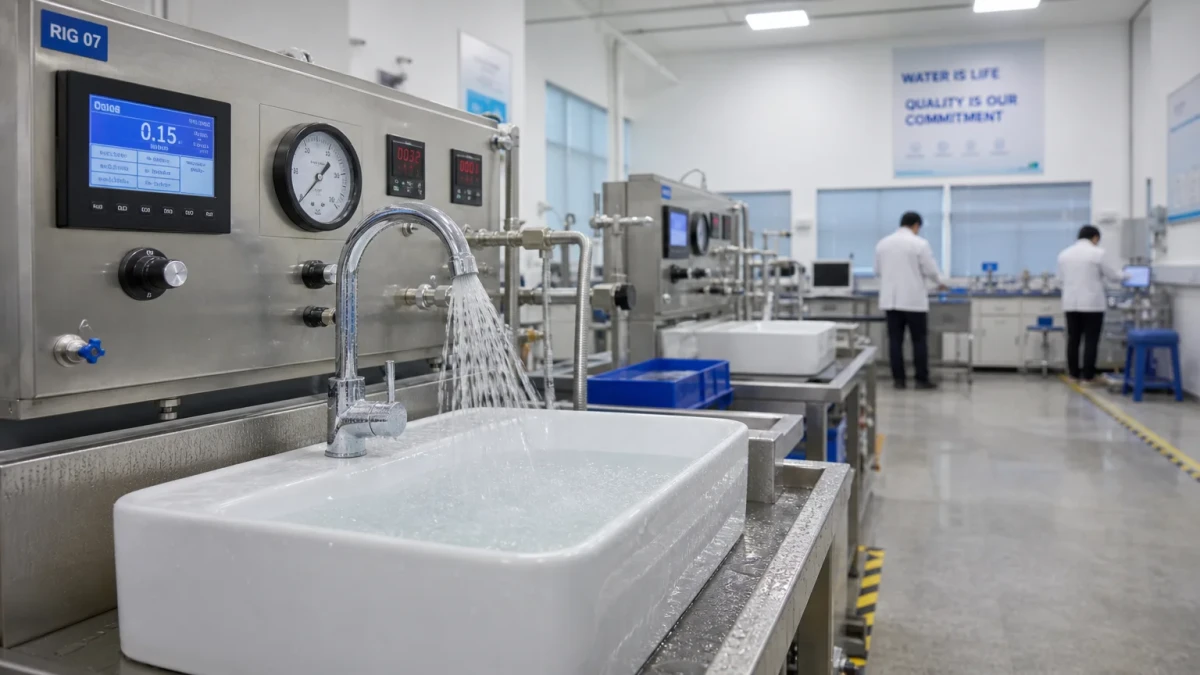
Which appearance, dimensional, leakage, flow, flushing, assembly, or market-specific checks apply to the model?
- 5. Packing
Does the approved packing protect the product, preserve model identity, and match the quotation?
- 6. Traceability
Can the supplier connect a finished unit or batch to inspection results, production records, and corrective action?
Check 4
Check certification by exact product scope
“Certified manufacturer” is too broad to approve a purchase. A management-system certificate, a product certificate, a test report, and participation in drafting a standard are different forms of evidence.
The WTO overview of Technical Barriers to Trade distinguishes technical regulations, standards, and conformity-assessment procedures. This is why approval must be checked against the destination market instead of assumed to transfer globally.
| Evidence | What it can show | What to verify |
|---|---|---|
| Management-system certificate | The audited scope of a quality or environmental management system | Holder, site, scope, issuing body, and validity |
| Product certificate | Compliance for named products or models under a defined scheme | Exact model list, technical scope, market, and current status |
| Test report | Results for the submitted sample under stated methods and conditions | Sample identity, test method, laboratory, date, and acceptance rule |
| Standards participation | Industry involvement in developing a standard | Do not treat participation as product certification |
For accredited management-system certificates, buyers can use IAF CertSearch as one validation route, then compare the result with the certificate holder, site, scope, and issuing body shown on the document.
For example, MICAWA’s reviewed evidence includes ISO 9001:2015 and ISO 14001:2015 management-system certificates with stated bathroom sanitary-ware scope. Its reviewed CCC evidence applies only to six listed smart-toilet models. Buyers can consult the CNCA compulsory product certification resources when reviewing the Chinese CCC scheme. The model boundary is exactly why buyers should verify scope instead of accepting a general certification claim.
Check 5
Evaluate sample and development capability
A supplier may handle stable catalog orders well but struggle with a new finish, private-label pack, revised dimension, or coordinated collection. Sampling reveals how technical decisions are made before volume production.
MICAWA reports OEM and ODM support from product development through sample production, testing and validation, and volume delivery. For a live program, the exact customization scope, tooling, fees, revisions, and approval timing still need category-level confirmation.
A useful sample plan should define
- the source drawing, specification, finish reference, and packaging brief;
- the sample type: appearance, functional, packaging, or pre-production;
- who approves the sample and how revisions are recorded;
- which tests are required before approval;
- whether the approved sample becomes the production reference.
Also assess communication through the sample cycle. Fast replies are useful, but accurate ownership matters more: the buyer should know who resolves drawings, materials, finishes, components, tooling, quality issues, and commercial changes.
Check 6
Normalize quotation terms before comparing price
A lower price may reflect a different product, missing packaging, fewer inspections, a different delivery responsibility, or exclusions that appear later. Build one quotation sheet and require every shortlisted bathroom supplier to respond to the same fields.
When comparing freight and delivery responsibilities, use the official ICC Incoterms® rules overview. Always record both the selected rule and the named place because the rule alone does not identify the delivery point.
| Field to normalize | What must be written |
|---|---|
| Product basis | Model, drawing revision, configuration, material, finish, accessories, and approved sample |
| Quantity and MOQ | Quantity per model and finish, mixed-order rules, and any category minimum |
| Quality and documents | Inspection basis, tests, reports, certificates, drawings, labels, and manuals included |
| Packing | Inner protection, carton, wooden frame if applicable, pallet, marks, and artwork responsibility |
| Delivery basis | Lead-time starting point, production assumptions, Incoterm, named place, and shipment plan |
| Commercial exclusions | Tooling, samples, testing, document fees, inland handling, spare parts, and other excluded costs |
MICAWA’s supplied company information reports an MOQ of 100 sets, but it does not confirm that this applies to every category, model, or finish. This is a good example of a term that should remain an RFQ question until the exact order mix is reviewed.
Check 7
Use a bathroom supplier evaluation scorecard
A scorecard prevents the strongest sales presentation or lowest headline price from dominating the decision. Score each factor from 1 to 5, multiply it by the weight, and add short evidence notes beside every score.
| Bathroom Supplier Evaluation Scorecard | Weight | What to score |
|---|---|---|
| Product fit | 15% | Category depth, assortment fit, in-house and outsourced boundaries |
| Manufacturing capability | 20% | Relevant processes, equipment, people, capacity, and production control |
| Quality evidence | 20% | Process controls, inspection, testing, traceability, and corrective action |
| Development capability | 15% | Brief review, samples, revisions, testing, and production handover |
| Commercial clarity | 10% | Comparable price basis, MOQ, exclusions, payment, and responsibilities |
| Delivery capability | 10% | Planning, packing, warehousing, consolidation, and shipment coordination |
| Communication | 10% | Accuracy, ownership, response quality, and change control |
| Total | 100% | Keep both the number and the evidence note. |
Recommended scoring rule
1 means the capability is missing or unclear. 3 means it appears suitable but still has important open items. 5 means it is well matched and supported by relevant, current evidence.
Do not let a high total hide a critical failure. A missing destination-market requirement, unresolved product-safety issue, or unclear responsibility boundary should remain a stop condition even when the average score looks acceptable.
Frequently asked questions
What is the first thing to check when choosing a bathroom products manufacturer?
Start with product fit. Separate the categories made in-house from products that are assembled or sourced externally, then confirm whether that operating model matches your sourcing strategy.
How can a buyer verify bathroom manufacturing capability?
Trace one quoted product through its real production route. Review the people, equipment, process controls, inspection points and records used from incoming material to finished packing.
How should bathroom supplier quotations be compared?
Normalize the model, specification, finish, packaging, quantity, testing, documentation, Incoterm, lead time and exclusions. Compare price only after every supplier is quoting the same commercial basis.
Evaluate MICAWA against your own scorecard
Send your product categories, destination market, expected quantity, development needs, and evidence checklist. MICAWA can respond with the relevant manufacturing scope and open items for your RFQ.