Material comparison for B2B buyers
Bathroom Cabinet Materials Guide: Plywood, Solid Wood, MDF, Particle Board and PVC
Choose a bathroom cabinet material by the installed environment, finish, construction and price position. Plywood, solid wood, MDF, particle board and PVC can all work in the right specification, but none makes a complete cabinet moisture-proof by name alone.

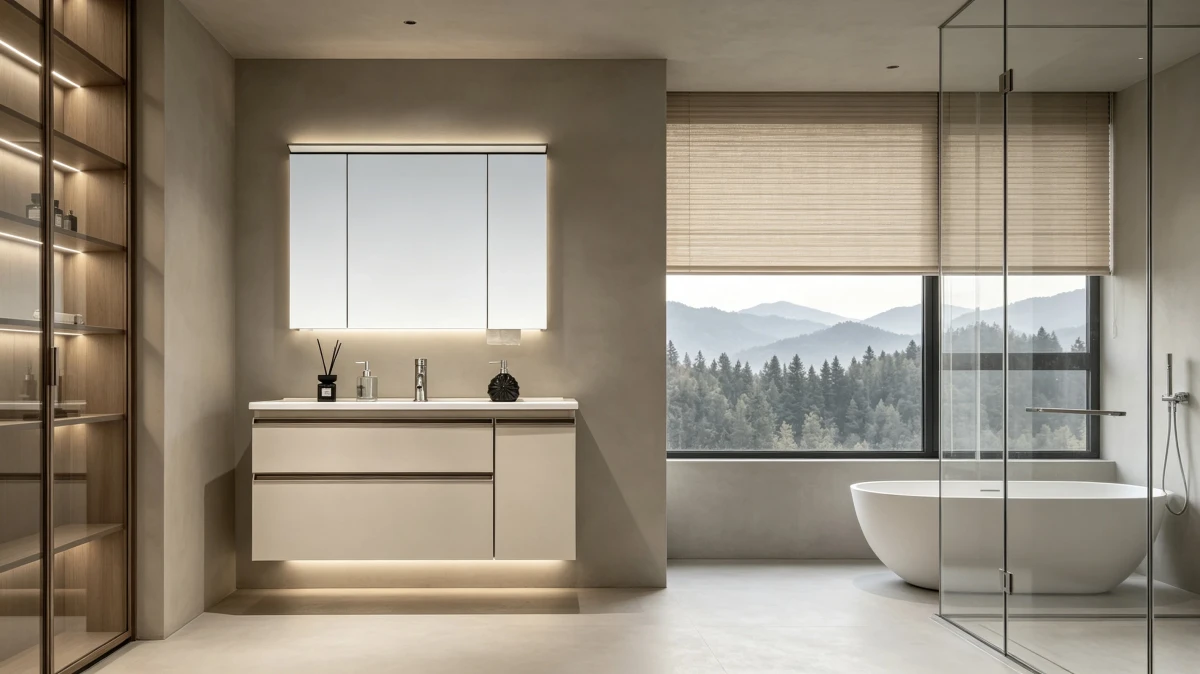
Start with the bathroom cabinet application
A low-splash powder room, a family bathroom, a hotel guest room and a wet-room vanity do not create the same risk. Record ventilation, cleaning method, likely splash zones, floor contact, wall condition and whether plumbing can leak inside the cabinet.
The decision also changes with the buying program. A premium natural-wood collection may value grain and repairability, while a large project may value finish consistency, replaceable parts and repeatable installation. Buyers comparing hotel and apartment vanities should map the material choice to each room type rather than use one vague specification for the whole project.
First decision rule
Define where water can reach the cabinet, then choose the substrate, finish and construction as one system.
Bathroom cabinet materials at a glance
The table shows common selection tendencies, not guaranteed performance grades. The exact species, panel grade, density, adhesive, treatment, thickness and manufacturing method can change the result.
| Material | Main strengths | Moisture considerations | Relative cost tendency | Common selection context |
|---|---|---|---|---|
| Plywood | Layered construction, good screw holding and useful strength-to-weight balance. | Often chosen for demanding use, but exposed plies, cut-outs and low-grade panels still need protection. | Medium to high | Project, premium and higher-use cabinets. |
| Solid wood | Natural appearance, repair potential and strong premium positioning. | Wood movement depends on species, drying, joinery, finish coverage and room humidity. | High | Premium fronts, frames or full cabinets where natural character matters. |
| MDF | Smooth, uniform surface that supports painted and routed door designs. | Performance depends strongly on grade, coating coverage and protection of machined edges and holes. | Medium | Painted vanities, shaped fronts and consistent color programs. |
| Particle board | Economical, flat and efficient for standardized panel production. | Edges, fastener points and damaged surface layers need careful control around moisture. | Low | Value ranges and controlled environments with a defined surface system. |
| PVC | Does not rely on wood fiber and is commonly considered for high-splash locations. | The panel may resist water, but rigidity, fastener holding, heat, joints and reinforcement still require review. | Medium | Wet environments and designs where water exposure is a primary concern. |
Plywood versus solid wood
Plywood uses cross-laminated veneers, while solid wood retains the behavior and appearance of the chosen species. Compare the actual plywood grade and veneer construction against the solid-wood species, moisture conditioning and joinery. “Wood” alone is not a usable RFQ description.
MDF versus particle board
MDF is usually selected for smooth painted surfaces and routed profiles. Particle board is often selected for flat, value-oriented panels. For either material, request the exact grade, thickness, density or technical sheet, surface layer and edge treatment.
When PVC enters the shortlist
PVC can reduce concern about fiber swelling, but it does not remove structural questions. Review panel thickness, internal reinforcement, hinge and runner fixing, shelf span, countertop load path, heat exposure and repair method before treating it as the automatic winner.
For U.S.-bound composite wood products, buyers should also review the U.S. EPA formaldehyde emission requirements and obtain evidence for the exact panel and supply chain in scope.
Board material is not whole-cabinet performance
Two cabinets using the same named board can perform differently. Water and load reach the cabinet through surfaces, edges, joints, holes, hardware and connected products. A useful comparison therefore follows the complete assembly, not one line in a material schedule.
Surface finishes
- Paint: compare primer, topcoat, coverage, curing, repair method and sample color.
- Wood veneer: confirm veneer species, substrate, grain matching, stain and protective topcoat.
- Melamine or laminate: confirm surface grade, bonding, edge solution and exposed cut-outs.
- PVC foil: review membrane coverage, routed profiles, corners, adhesive system and heat exposure.
Edge sealing and hidden openings
Inspect door edges, shelf edges, back-panel grooves, pipe cut-outs, faucet holes, countertop joints, floor contact and wall-fixing holes. Ask whether post-machining cut-outs receive the same protection as factory-finished edges.
Hardware and construction
Hinge cups, runner screws and handles transfer repeated loads into the panel. Compare fastener method, hinge and runner specification, drawer load assumptions, cabinet joints, back-panel construction and access to replaceable parts.
Basin and countertop interfaces
The basin, countertop, faucet, waste and plumbing clearance can expose the cabinet to both water and load. Confirm cut-outs, support points, sealing responsibility, overflow route and maintenance access on the approved drawing and sample.
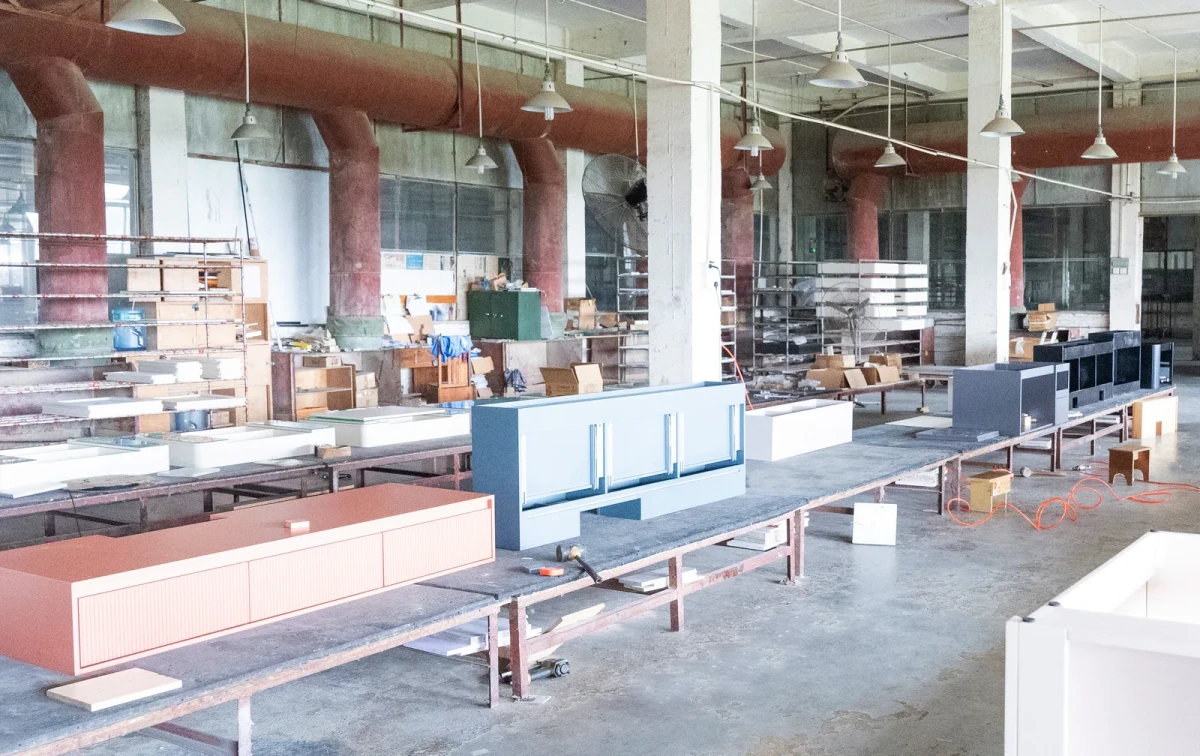
Sampling and quality checks
A board swatch proves color and surface only. Approve a complete cabinet or representative mockup when material, finish, hardware and basin interfaces affect the buying decision. The hotel bathroom vanity sourcing guide adds room-type and project approval controls for hospitality programs.
- 1. Match the record.Record model code, drawing revision, substrate by component, thickness, finish code and hardware specification.
- 2. Inspect exposed paths.Check edges, drilled holes, pipe cut-outs, joints, back panels and floor or wall interfaces.
- 3. Operate the cabinet.Open doors and drawers, review alignment, feel runner action and check access for installation and maintenance.
- 4. Fit connected products.Verify countertop support, basin fit, faucet clearance, waste route, plumbing access and mirror relationship.
Packaging, quantity and delivery questions
Material choice affects weight, edge vulnerability and how much assembly is practical before shipment. Confirm whether the cabinet ships assembled, partly assembled or flat-packed, and identify which party fits the basin, countertop, mirror and hardware.
- Request carton and internal-protection details for painted corners, glass, mirrors, basins and hardware.
- Separate quantities by cabinet model, finish, basin option, mirror option and room type.
- Confirm spare parts, replacement panels, touch-up method and carton identification before approval.
- Treat MOQ, sample policy, lead time, warranty and loading plan as quotation-specific items. They are not established by the board material.
Supplier comparison worksheet
Send the same worksheet to each bathroom cabinet manufacturer. Do not compare a plywood quote with a particle-board quote as if the material name were the only changed variable.
| Comparison field | Supplier A | Supplier B | Evidence or open question |
|---|---|---|---|
| Application and room condition | Room type, splash, ventilation, cleaning | ||
| Substrate by component | Carcass, fronts, shelves, back panel | ||
| Thickness and grade | Technical sheet or written specification | ||
| Surface and edge system | Finish layers, edge method, cut-out protection | ||
| Hardware and construction | Hinges, runners, joints, fasteners, back panel | ||
| Basin and countertop | Support, cut-outs, sealing, plumbing clearance | ||
| Approved sample | Model and revision linked to approval record | ||
| Packing and commercial basis | Packing format, quantity, MOQ, timing, exclusions |
For residential programs, use this material record with the broader residential bathroom furniture sourcing route so storage, assortment, finish and replacement planning stay connected.
Frequently asked questions
What is the best material for a bathroom cabinet?
There is no single best material for every bathroom. Plywood is often shortlisted for demanding projects, MDF suits smooth painted fronts, particle board can suit controlled value ranges, solid wood suits natural premium designs, and PVC can suit high-splash locations. The grade, finish, edge sealing, construction and installation matter as much as the material family.
Is MDF suitable for a bathroom vanity?
MDF can be suitable when the specified grade, coating system, sealed edges and installation conditions are appropriate. Unsealed cut-outs, damaged coatings and standing water create higher risk, so approve the complete sample rather than the MDF label alone.
Does a waterproof board make the whole cabinet waterproof?
No. Water can reach joints, drilled holes, cut-outs, back panels, hardware fixings, countertop seams and wall connections. Ask the supplier to define the exact substrate and the protection used at every exposed interface.
Compare a real cabinet specification
Send the intended room use, cabinet dimensions, preferred material, finish direction, basin type, quantities and destination market. MICAWA can review the scope against its current bathroom furniture options and identify the model details that still require confirmation.